How Much Does International Transcript Evaluation Cost in 2026

John Sherman
March 23, 2026
The landscape of international credential evaluation is undergoing a significant shift as we head into 2026. For years, the cost and complexity of evaluating foreign academic records have been a primary hurdle for both international students and the institutions seeking to admit them. Understanding the current financial and operational environment is essential for universities aiming to remain competitive in a time-sensitive global market.
The Financial Burden of Traditional Evaluation
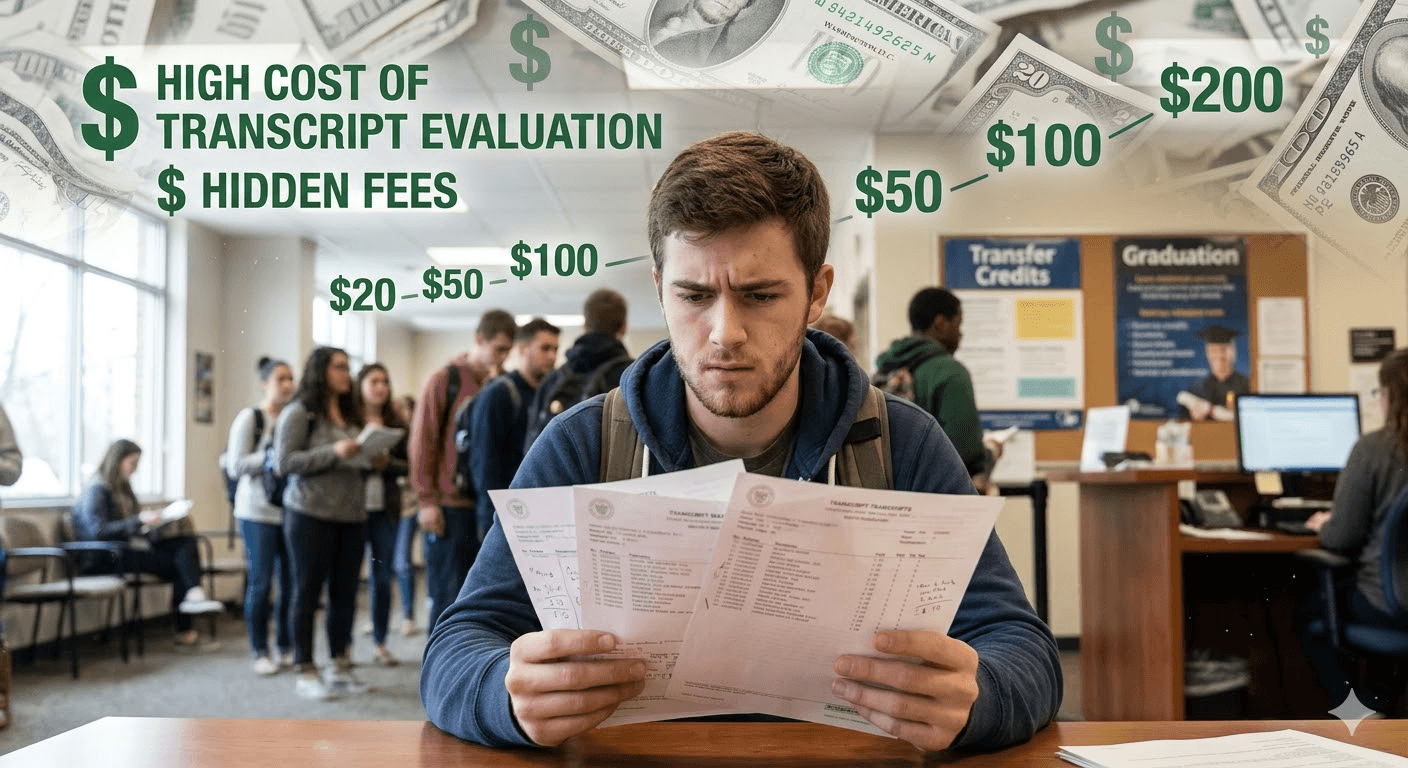
Currently, traditional evaluation agencies, including many NACES member agencies typically charge between $180 and $300 per evaluation. However, the "sticker price" rarely reflects the final cost to the student. These agencies often apply additional fees for primary-source verification, physical report copies, and "rush" processing to meet tight university deadlines.
These cumulative costs create a significant friction point. Many students, burdened by these expenses, are increasingly drifted toward universities that either do not require a third-party evaluation or have the capacity to perform the evaluation in-house. For institutions, relying on external agencies can lead to 12–16 week decision cycles, which is double the institutional target of 6–8 weeks.
The Rise of In-House Evaluation Teams
To combat student drop-offs and high turnaround times, many university admissions offices are bringing the evaluation process in-house. These teams are actively seeking solutions that allow them to process transcripts faster while developing a more holistic understanding of each application.
The goal for these departments is to eliminate manual data entry and "broken" decisioning flows that result in missed opportunities. By reclaiming thousands of staff hours from transactional document processing, teams can focus on high-value analytics and strategic student engagement.
AI-Powered Efficiency with TruEnroll
The emergence of AI-powered transcript evaluation platforms like TruEnroll has redefined the cost-value proposition for 2026. By leveraging specialized Intelligent extraction and machine learning, these platforms automate the most tedious aspects of the workflow:
Document Extraction: Intelligent, template-free data extraction with 98%+ accuracy.
Global Translation: Real-time translation for languages from over 180 countries.
GPA & Credit Conversion: Instant re-calculations and automatic credit-hour conversions based on institution-configurable rules.
Fraud Detection: Real-time analysis of 70+ signals to identify pixel manipulation or font inconsistencies.
Conclusion: A 10x Increase in Efficiency
For universities, the transition to AI-supported workflows is not just about saving money, it is about speed. TruEnroll users report that their operational efficiency has increased by almost 10x. By compressing transcript processing from days or weeks down to just 1–3 minutes, admissions officers can make faster enrollment decisions and secure "best-fit" students before their competitors do.