What Are the Pricing Models for AI Transcript Evaluation Platforms

Katie Jabri
March 24, 2026
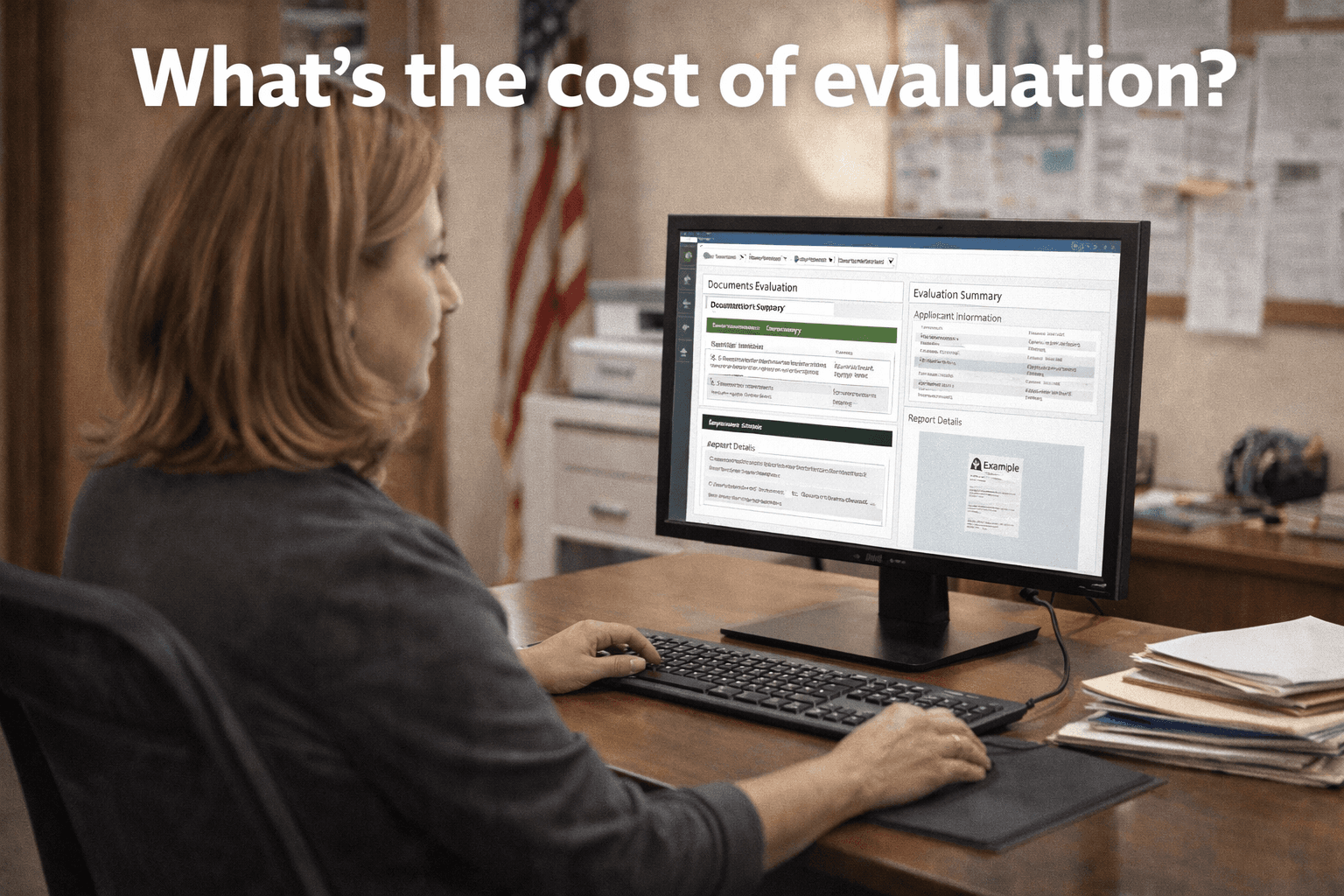
As higher education institutions look to modernize their admissions workflows in 2026, understanding the diverse pricing structures of AI transcript evaluation platforms is essential for financial stewardship. The market currently offers several different models, each with distinct implications for institutional budgeting and operational scaling.
Common Industry Pricing Structures
Pricing models for these technologies vary significantly from one platform to another. Some vendors utilize a "Per User" or "Per Seat" monthly subscription combined with the volume of documents processed. Other providers may price their services strictly "Per Page," which can become complex as transcript lengths vary. Additionally, some platforms gate their technology behind feature-based pricing, where advanced capabilities like fraud detection or automated translation require higher-tier subscriptions.
The TruEnroll Model: Per Applicant
In contrast to complex per-seat or per-page models, TruEnroll utilizes a transparent pricing structure based on the number of applicants processed. Key characteristics of this model include:
No User Restrictions: There are no separate licensing fees per user or per seat, allowing entire admissions and IT teams to access the platform without incremental costs.
All-Inclusive Features: The model does not restrict access to specific platform features; tools for GPA conversion, domestic transfers, financial document analysis, and AI fraud detection are included.
Predictable Forecasting: Because the model is purely based on applications processed, universities can easily forecast their annual costs in proportion to their actual workload.
Volume-Based Scaling: For large institutions, the unit price per applicant decreases as volume increases for high-capacity users.
Seamless Integration with Core Systems
A critical component of the value proposition for these platforms is how they fit into existing infrastructure. Rather than acting as a standalone tool, modern solutions offer seamless integration into a university's existing CRM or Student Information System (SIS).
TruEnroll, for instance, provides robust connectivity via APIs and connectors to push validated data directly into:
Salesforce: Ensuring transcript data flows directly into existing applicant records.
Oracle PeopleSoft: Enabling the automatic update of student records and educational history within the CUNYfirst environment or similar systems.
Slate: Utilizing a native app or API to integrate verification and evaluation directly into current workflows
Conclusion
By choosing a per-applicant pricing model, universities avoid the "hidden" costs associated with adding staff members to a system or processing multi-page documents. This transparency, combined with deep CRM integration, allows institutions to enjoy the full benefits of AI automation - such as a 10x increase in efficiency - with a clear and manageable ROI.